
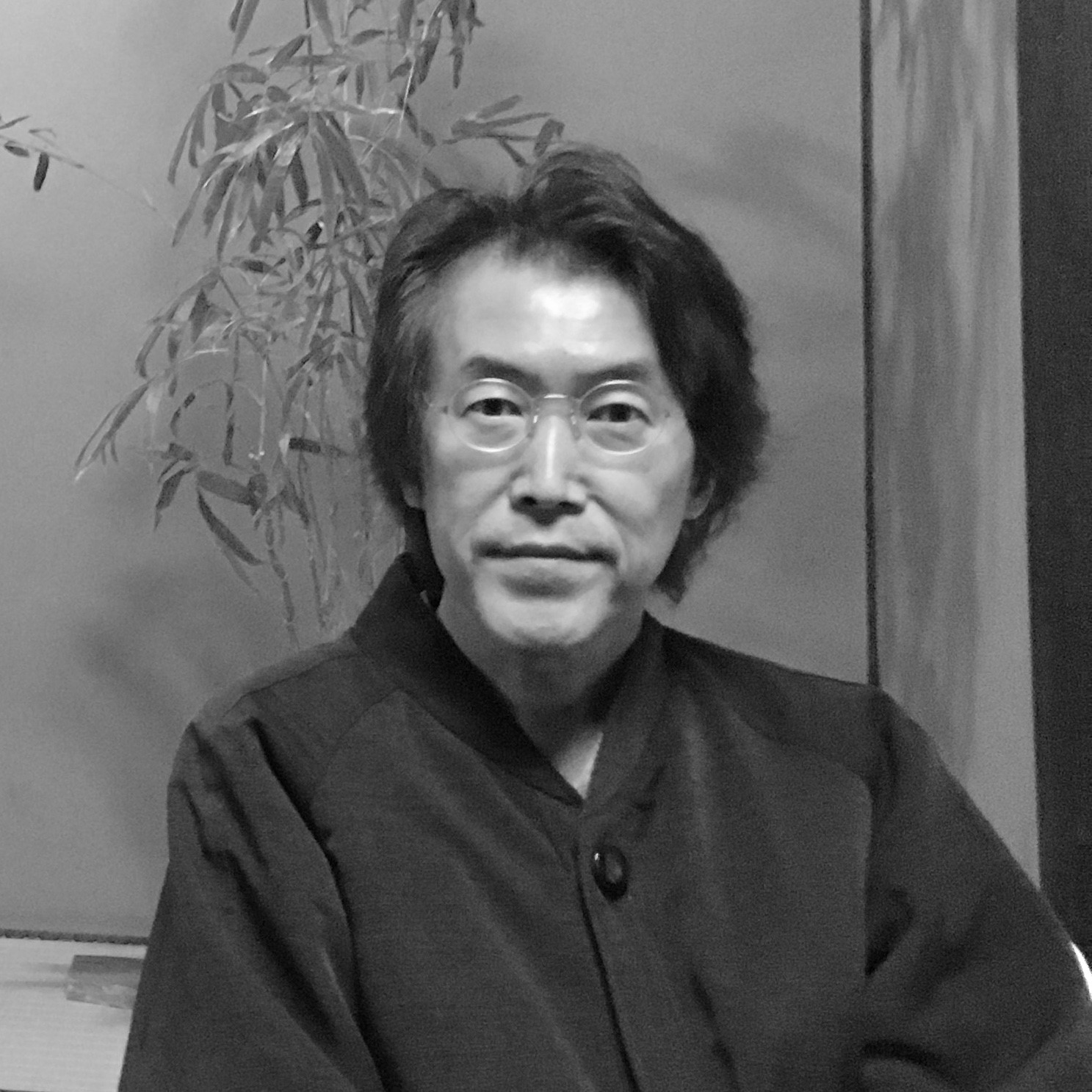
Inventor of KenKen, Tetsuya Miyamoto
Acclaimed Japanese mathematics instructor, Tetsuya Miyamoto, invented KenKen in 2004 with the goal to improve his students’ math and logic skills. His teaching philosophy is "The Art of Teaching Without Teaching" which is focused around the idea of students learning new math skills while enjoying fun games that encourage problem solving skills. To do so, he developed a fun puzzle that would encourage independent thinking, emphasizing trial and error, concentration, and perseverance. KenKen was extremely effective as a teaching mechanism, and the puzzles were so addicting that they have since become a favorite activity for millions of players worldwide and exploded into an international favorite.
- If a person runs only 1 mile, then running a marathon would seem like an unlikely goal. However, if a person runs 1 mile today, 5 miles next week, 10 miles next month, and 15 miles next year, running a marathon would be a reasonable goal. The same applies to solving KenKen puzzles– starting with a 3x3 puzzle and gradually increasing the level builds a spirit of challenge, a feeling of accomplishment and self-confidence. Eventually, the player will develop skills that will allow them to solve 9x9 puzzles. This step-by-step strategy is not only applicable for classroom teaching, but also useful for achieving higher hurdles in life.
- If a person wants to lose weight, going to a gym and watching other people work out would not help them lose weight. They have to do the exercise themselves. The same applies to solving KenKen puzzles– a player has to complete the puzzle alone, using their own brain to get smarter.
- If a person wants to build stronger muscles, they have to lift heavy weights. Someone who regularly lifts 150 pounds can easily lift 100 pounds. The same applies to solving KenKen puzzles – solving 1 million 3x3 puzzles requires minimal effort and will not make the brain smarter. Solving one challenging puzzle, which uses the full brain, is what makes the brain smarter.
- If a person can buy a gold medal, should they? The value of the medal is the knowledge of earning it, not the commodity value of the medal itself. The same applies to solving KenKen puzzles – people who solve KenKen puzzles by themselves face challenges, trials and errors that lead to great satisfaction and self-confidence after completion.
- If a person wants to watch a mystery movie and participate in finding one clue after another, a friend who gives away the perpetrator spoils the movie watching experience. The same applies to solving KenKen puzzles – solving KenKen is just like watching an exciting, thrilling mystery movie. Giving hints to someone solving a KenKen puzzle is the same as an annoying friend spoiling the end of a movie before you go to see it.
- The most important part of KenKen is the process to reach the solution, not the solution itself. Sticking to the problem with perseverance and using full brainpower will make the brain stronger. How deep a person thinks while solving the puzzle is crucial, not the speed at which it is solved.
- Life is a sequence of challenges that get harder and harder as they go on. When someone finishes a challenge, an even larger one is often waiting. If people do not enjoy these challenges along the way, life will never be fun. Solving hard KenKen puzzles allows people to realize that challenges, although a struggle, can be fun too.
- Pursuing happiness is all for oneself. Directing efforts towards someone else, like working hard to get good grades for your parents, is limited. If someone gives effort for themselves, they can endlessly improve their ability. Happiness is unique to each person and not easy to find. Using deductive reasoning (what do I NOT want to do?) to find happiness is tough, but because it leads to something a person truly wants, the person can stick to it.
To learn more about Tetsuya Miyamoto, click here
Comments
0 comments
Article is closed for comments.